
Best AI Business Tools for Small Businesses – What’s Actually Worth Your Time and Money
Running a small business is a lot.
You’re the CEO, the marketer, the customer service rep, the bookkeeper, and sometimes the janitor, all before noon. You don’t have a team of specialists. You don’t have an enterprise software budget. And you definitely don’t have time to test 40 AI tools to figure out which three are actually useful.
I have done that part for you.
Over the past few months, I have been testing AI tools, particularly from the lens of a small business owner and not a Fortune 500 IT department or a funded start-up with engineers on staff. I am discussing the kind of businesses where a single person dons five different hats wherein he/she requires software that simply works, does not cost a lot, and actually saves time instead of creating a brand new thing to manage.
Here is what I found.
Table of Contents
Why Small Businesses Are Finally Winning With AI
Here is something that used to inspire me crazy about business software – the best tools were always developed for enterprise. The more minuscule you were, the more you were stuck with watered-down versions, restricted seats, or pricing that made no sense for a three-person operation.
AI has flipped that dynamic. A lot.
The best AI tools for business right now don’t care if you have 3 employees or 3,000. The same tool a solo consultant uses is functionally the same one a mid-market company uses. There is a narrow gap now between what a small business can perform and what a big business can perform.
What that means practically:
You can produce at a higher volume without hiring. One person with the right AI software for business can produce the content, handle the customer communication, and manage the admin that used to require a full team.
Response time gets faster. The customers of today expect quick replies. AI manages the routine enquiries, keeps things moving even when you are not present at your desk, and drafts the responses.
You stop doing work that doesn’t need a human. Invoicing, follow-up emails, social captions, meeting summaries, expense categorization – AI handles these well. You concentrate on the work that actually requires your relationships and judgments.
You compete on quality, not merely on price. A small agency makes effective use of AI for design, client communication, and content that helps deliver work that looks and feels absolutely precise and quality-driven.
What I Looked For When Testing These Tools
I wasn’t just checking feature lists. Here’s what I actually evaluated:
- Does the free or low-cost tier do real work? Not a teaser, actual functionality you can build a workflow around
- How fast can you get up and running? Small business owners don’t have time for three-month onboarding
- Does it replace something you’re currently paying for? The best AI tools consolidate costs, not add to them
- How much babysitting does it need? If you have to heavily edit every output, it’s not saving time
- Is the pricing honest? No hidden seats, no bait-and-switch, no “contact sales for pricing”
Quick Comparison: Best AI Tools for Small Business
Tool | Category | Best For | Free Plan | Starting Price |
ChatGPT / Claude | General AI assistant | Writing, strategy, comms | ✅ Yes | Free–$20/mo |
Jasper | Content & copy | Marketing teams, agencies | ❌ No | ~$49/mo |
QuickBooks AI | Accounting & finance | Bookkeeping, invoicing | ❌ No | ~$30/mo |
HubSpot AI | CRM + marketing | Sales pipelines, email | ✅ Limited | Free–$20/mo |
Canva Magic Studio | Design | Visual content creation | ✅ Yes | Free–$15/mo |
Zapier + AI | Automation | Workflow automation | ✅ Limited | Free–$20/mo |
Fireflies.ai | Meetings | Call recording, summaries | ✅ Yes | Free–$18/mo |
Copy.ai | Marketing copy | Ad copy, email, landing pages | ✅ Limited | Free–$49/mo |
Tidio | Customer support | Live chat + AI chatbot | ✅ Yes | Free–$29/mo |
Motion | Scheduling & productivity | Time management, planning | ❌ No | ~$34/mo |
The Best AI Business Tools for Small Businesses – Honest Reviews
1. ChatGPT or Claude (General AI Assistant)

Source Image:- images.ctfassets.net
Best for: Everything that doesn’t have a dedicated tool yet
Before you buy any specialized AI software for business, start here. A general-purpose AI assistant – ChatGPT or Claude – is the Swiss Army knife that plugs gaps everywhere else.
Write a proposal? Done. Draft a difficult client email? Done. Summarize a 40-page contract in plain English? Done. Build a content calendar for next quarter, prep talking points for a sales call, write your “About Us” page, figure out how to respond to a negative review – all of it, in the same place, for free or close to it.
I use Claude for writing-heavy tasks because the output sounds less generic and needs less editing. I use Claude for writing-heavy tasks because the output sounds less generic and needs less editing.
What I actually use it for: I mainly use it to tidy up rough meeting notes, pull out the next steps, write job descriptions, sketch out proposal drafts, and prepare emails before sending them to clients.
The honest downside: It does not connect to your business data by default. It doesn’t know your customers, your past invoices, or your ongoing projects unless you tell it. And on the free plans, there are usage limits that kick in when you’re doing heavy work. For truly repetitive, automated tasks – you will need something more specialized.
Bottom line: Start here before spending money on anything else. The free tier of either tool handles more than most small business owners expect.
2. Jasper
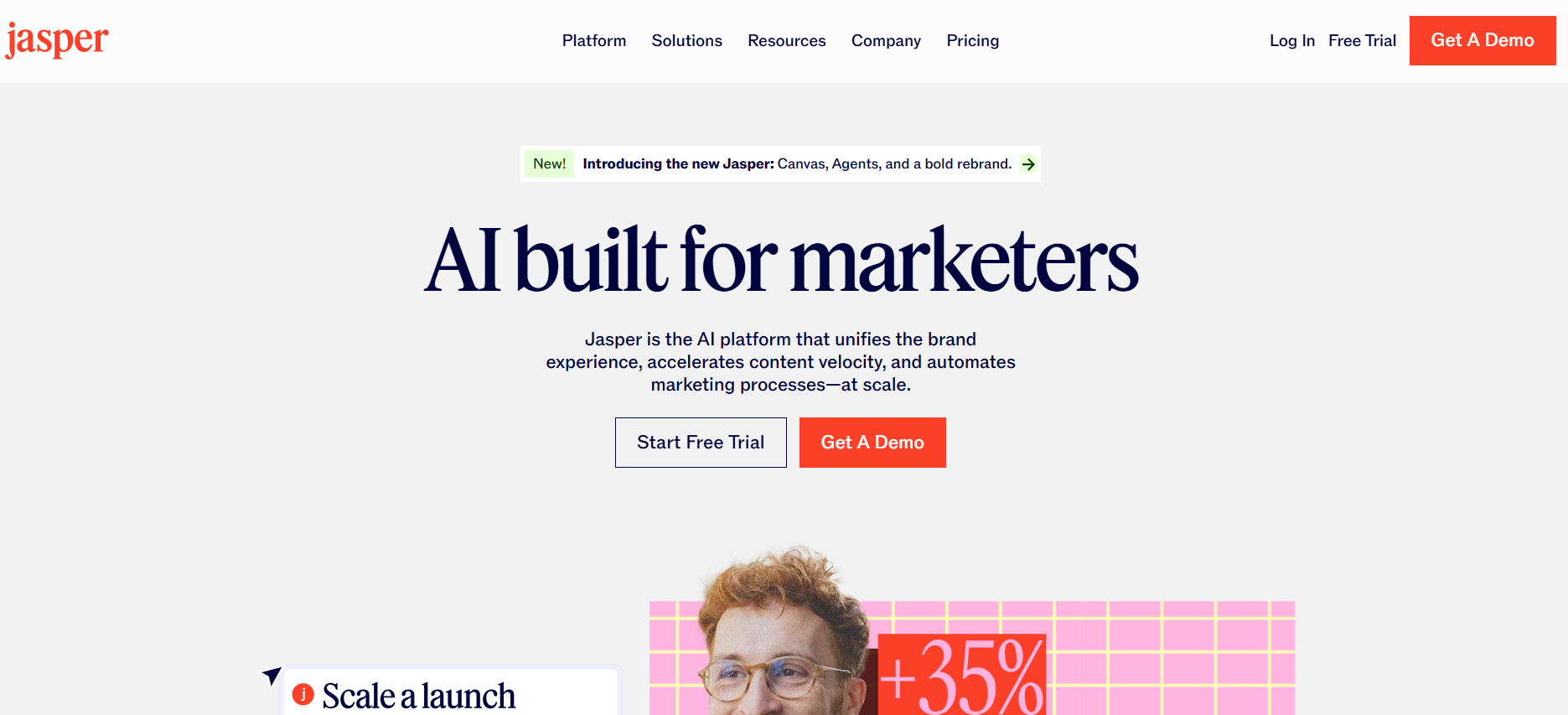
Best for: Small businesses producing a lot of marketing content
If content creation is a significant part of your business – blog posts, social media, email campaigns, product descriptions, ad copy – Jasper is worth the investment.
What separates Jasper from just using a general AI assistant is the brand voice feature. You train it once on how your business sounds, and every output reflects that. Whether it’s a product email or an Instagram caption, it sounds like you – not a generic AI template. That consistency is genuinely valuable when your brand voice is a differentiator.
The marketing-specific templates are extensive and high quality. Campaigns that used to take a week of writing can get done in a few hours. For small business owners who are good at their trade but not natural writers, that’s a game changer.
What I actually use it for: Writing a month of blog content in a single afternoon, drafting email sequences for new customer follow-ups, generating multiple variations of ad copy for testing.
The honest downside: No free plan, and the pricing is meaningful for a small business. If you’re only producing one or two pieces of content a week, the math might not work. Jasper makes sense when content volume is high enough that the time savings justify the subscription.
Bottom line: One of the best AI tools for business owners whose marketing depends on consistent, volume content. Test the trial period seriously before committing.
3. QuickBooks with AI Features
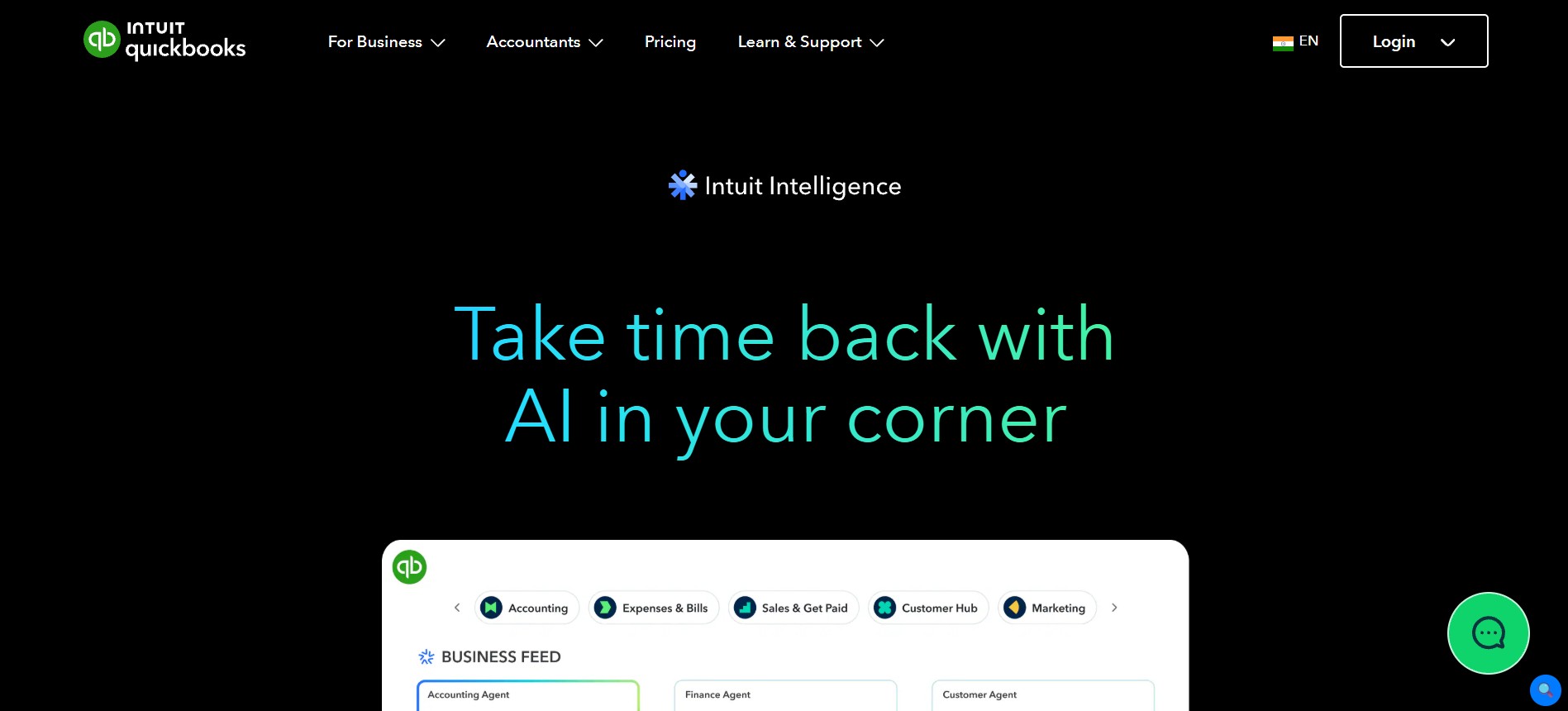
Best for: Small business owners who dread the financial side
QuickBooks has been the small business accounting standard for years. The AI features they’ve added make an already useful tool smarter – expense categorization happens automatically, cash flow projections update in real time, and the assistant can answer plain-English questions about your financials without you needing to know what a P&L report actually means.
The ask a question feature is where I have found the most value. Rather than trying to ascertain which report to pull and the best way to read it, I simply type: how much did I spend on contractors last quarter versus the same period the previous year? and get a response. This resulted in me becoming aware of accounts and even paying someone who did.
In case you are a small business owner managing your own books, that sort of accessible insight alters the way you make decisions.
What I actually use it for: To stay on top of the money side of things, such as unpaid invoices, expenses, and a swift scrutinization of whether the month was actually profitable.
The honest downside: QuickBooks is not cost-effective. Its pricing tiers can feel like nickel-and-diming once you commence integrating features. The AI features are also quite good on the higher-tier plans. In case you are a small business or just commencing the business, Wave, which is freely available, or FreshBooks might be best to try initially.
Bottom line: The most mature AI software for business finances among small business tools. Worth it if you’re already paying for accounting software – and you should be.
4. HubSpot (Free CRM + AI Features)
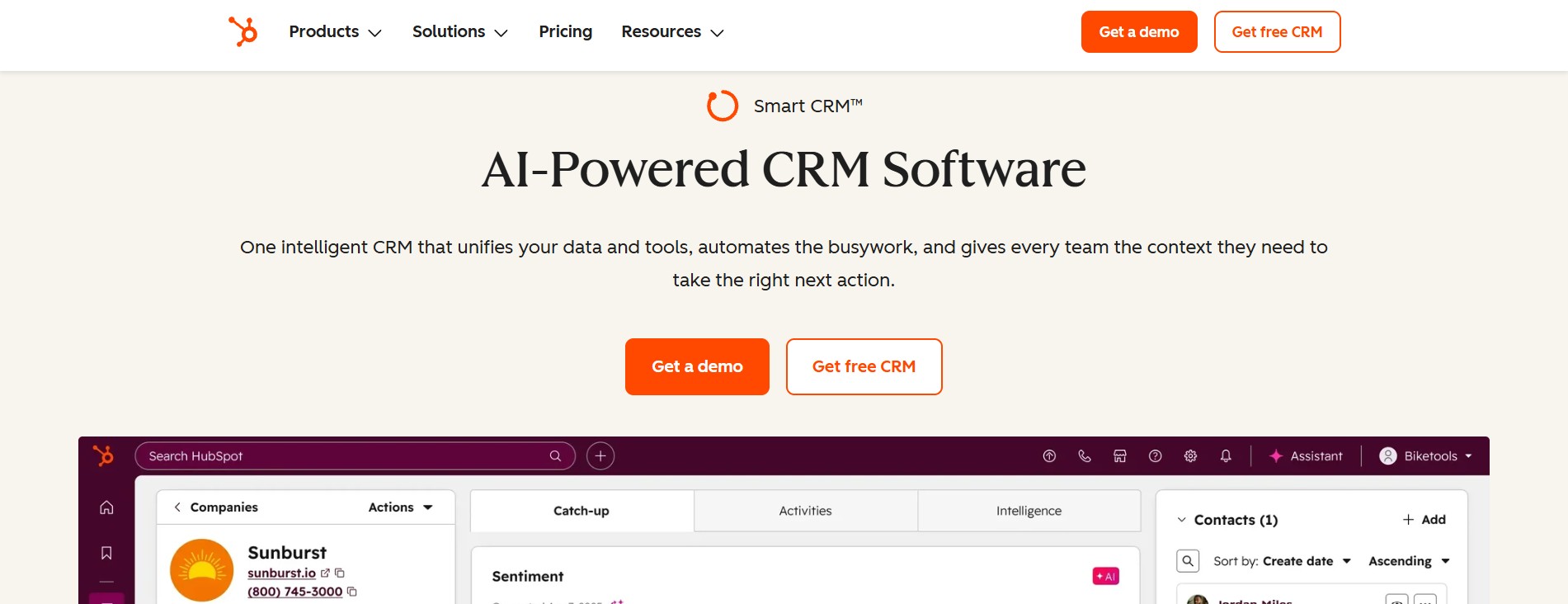
Best For: Small businesses requiring to manage leads and customer relationships without needing to hire a big sales team
HubSpot’s free CRM is one of the most generous free plans in the business software world, and the AI features built into it punch well above the price of entry.
The AI email writer helps draft sales and follow-up emails from inside your CRM, so instead of switching to an AI tool, copying the output, and pasting it back, it just lives where your contacts live. The AI content assistant works similarly for marketing emails and landing pages.
For small business owners who have been managing customer relationships in a spreadsheet or, worse, their memory – HubSpot brings real structure. And because the CRM itself is free, you’re really just paying for the upgraded AI features if you decide you need them.
What I actually use it for: Inspecting every prospect and customer in a single place, setting automated follow-up reminders, creating personalized outreach emails without commencing from the beginning every time.
The honest downside: The free plan of HubSpot is good; however, it is also a funnel into their paid plans. Once your business expands, you will feel the restrictions of the free tier, and the paid upgrades are exorbitant. It is worth being clear-eyed about that before you develop all the processes using it.
Bottom line: The ideal free starting point for businesses that require a CRM with AI baked in. Make effective use of the free plan thoroughly before making the final call on whether to go for the paid tier.
5. Canva Magic Studio
Best for: Small business owners who require professional-looking visuals without hiring the services of a designer
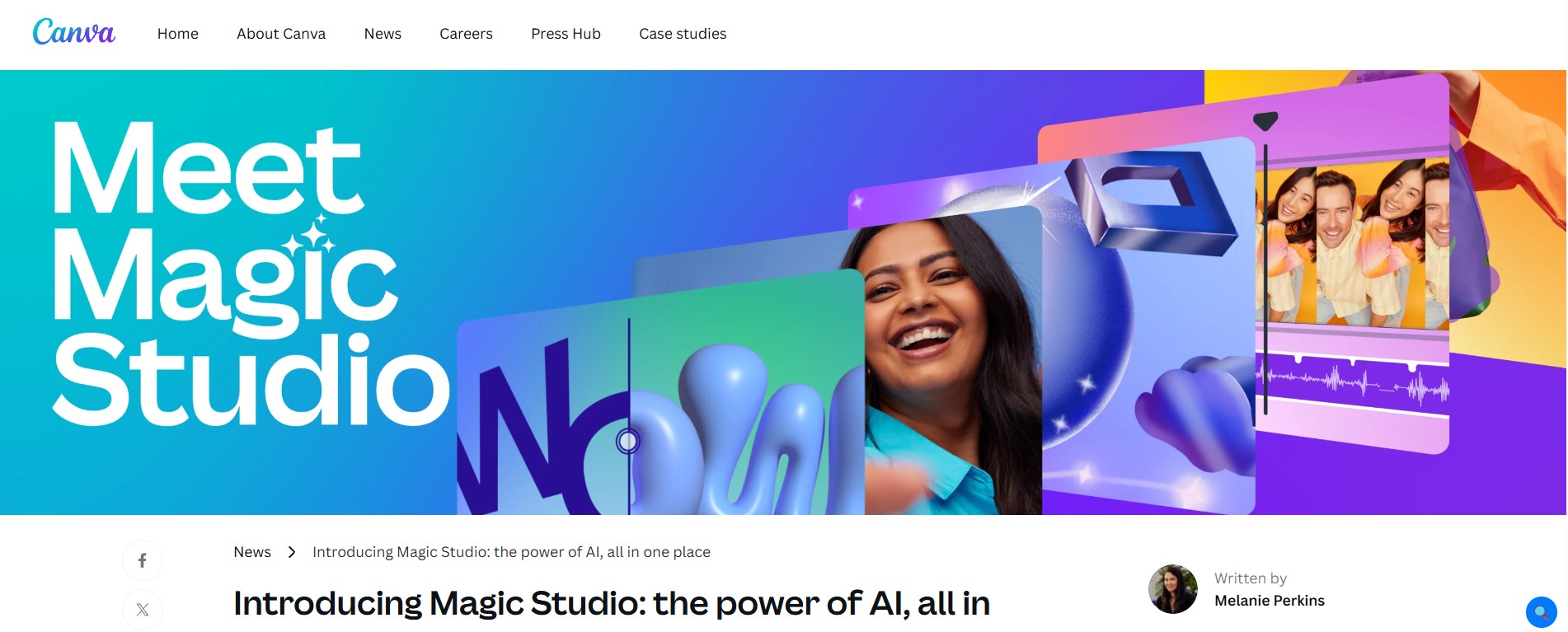
Canva has already been the go-to tool for businesses that do not wish to hire designers to make things look visually stunning. The AI features in Magic Studio make it considerably more accurate.
You can now generate images from text descriptions, remove backgrounds with one click, animate designs, resize content for every platform automatically, and generate caption copy all within the same tool. That used to require Photoshop, a separate AI image generator, a copywriting tool, and probably a freelancer.
If you are a small business such as a boutique promoting a sale, a consultant curating a client presentation, or a local restaurant posting its specials, this is one of the best AI tools for such small businesses with respect to ROI per dollar spent.
What I actually use it for: I use it for curating social media graphics without the services of a designer, developing client presentations that do not seem like PowerPoint templates from 2009, developing branded materials such as flyers, proposals, and menus with a professional touch.
The honest downside: The AI image generation is good but not exceptional compared to dedicated tools like Midjourney. And the Pro subscription, which unlocks the best AI features, costs money – the free plan gives you a taste but you will likely want to upgrade. If all you are doing is basic graphic creation, the free plan holds up fine.
Bottom line: Essential for any small business that produces visual content and doesn’t have a dedicated designer. The free plan is a legitimate starting point.
6. Zapier with AI Features
Best for: Automating the repetitive tasks that eat your day
Zapier isn’t new, but the AI features added in recent years make it something different, you can now describe in plain English what you want to automate, and Zapier builds the workflow. No more manually connecting triggers and actions through dropdown menus.
What I actually use it for: The kind of thing I would want is simple: a booked call triggers the next email, a paid customer shows up in the CRM, and a new project already has its Drive folder waiting.
The honest downside: The free plan is limited to basic, two-step automations. The real power is in multi-step zaps, which require a paid plan. And while the AI helps build automations faster, debugging something that breaks is still frustrating if you’re not comfortable with how apps connect to each other.
Bottom line: It is one of the highest-leverage AI tools for business in case your biggest problem is repetitive, mundane tasks. Commence with the free plan to get a hang of it and then upgrade once you have ascertained the automations that can save your invaluable time.
7. Fireflies.ai
Best for: Small business owners who live on calls and hate taking notes
In case your business requires you to make client calls, sales calls, team meetings, or any situation where someone requires you to recall what was discussed, Fireflies is one of those tools that help you manage it effectively.
The free plan is genuinely useful, you get a certain number of transcription minutes per month and the summaries are included. For small business owners doing a handful of calls a week, the free tier might be all you ever need.
What I actually use it for: Never taking notes during client calls, having a searchable record of every decision made in every meeting, generating follow-up email summaries immediately after a call ends.
The honest downside: Some clients feel uncomfortable knowing a call is being recorded and transcribed, even when it is disclosed. The transcription accuracy dips with multiple speakers talking over each other or with heavy accents. And the free plan limits will affect higher-volume users.
Bottom line: The best AI tool for small business owners who spend considerable time on calls. It helps you to save time on notes and follow-ups, which gives you enough time to make the right decision.
8. Copy.ai
Best for: Small businesses that need fast marketing copy without a copywriter
Copy.ai fills a specific gap: you need good marketing copy – for ads, emails, product pages, social posts, but you don’t have a copywriter and you don’t want to spend an hour prompting a general AI tool to get something usable.
The templates in Copy.ai are built specifically for marketing formats. You fill in a few details about your product, your audience, and the tone you want – and it generates multiple variations of copy designed for that specific format. Facebook ad? There’s a template. Cold email sequence? Yep. Product description for an e-commerce listing? Done.
The free plan is limited but useful for testing. The paid plan is reasonable for small businesses compared to the cost of even occasional freelance copywriting.
What I actually use it for: Generating multiple variations of ad copy to test, writing product descriptions at volume, drafting cold outreach emails that don’t sound like a cold outreach email.
The honest downside: The output often needs editing, especially for niche industries where the AI doesn’t have much context to draw from. It is better at producing a starting point in comparison to a finished product. In case you are expecting to copy-paste without reading it initially, you will be extremely disappointed.
Bottom line: Value for money for small businesses that need marketing copy regularly. However, they cannot justify availing the services of a full-time copywriter. The free trial is worth running before you contemplate over purchasing the paid plan.
9. Tidio
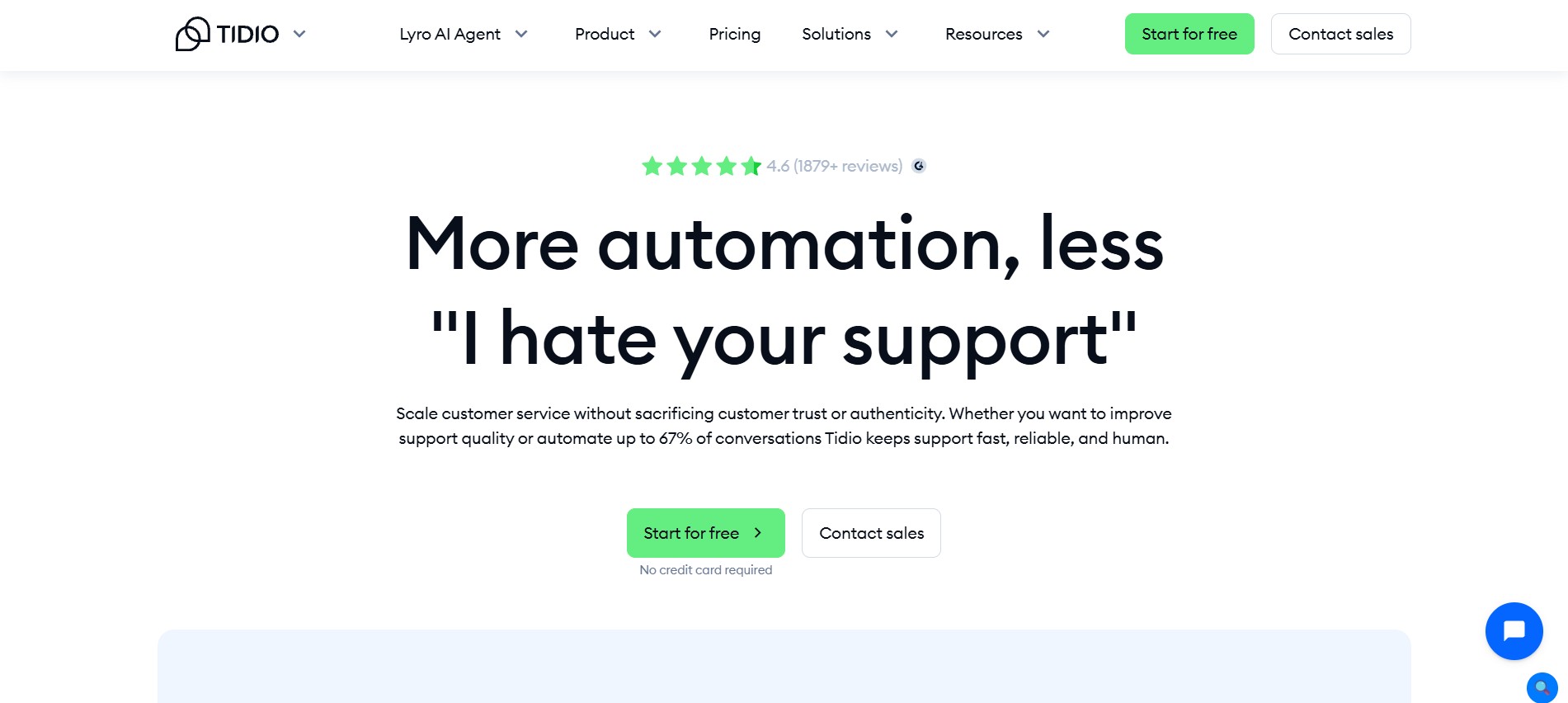
Best for: Small businesses getting a lot of customer enquiries but do not have adequate time to respond immediately
Ever lost a customer only because they asked a question on your website at 10 PM and you did not revert to them till the next morning? Tidio solves that.
It is an AI-powered chat tool that handles customer inquiries on your website automatically, answering FAQs, collecting contact info, qualifying leads, and escalating to you when something needs a human. The AI is trained on your business information, so it answers in the context of your actual products and policies.
For e-commerce businesses, service businesses, or anyone with a website that gets traffic outside business hours, having a responsive chat experience without hiring someone to sit at a computer all day is a real operational improvement.
What I actually use it for: Answering common questions about pricing and availability automatically, collecting contact info from visitors who are interested but not ready to fill out a full form, letting customers know when I will be available if the AI can’t help.
The honest downside: Setting up the AI responses properly takes a meaningful upfront investment of time. If you rush the setup, the bot gives vague or wrong answers, which is worse than no bot at all. Budget a few hours to get it trained correctly before going live.
Bottom line: One of the best AI tools for small business customer support, especially for businesses that get inquiries outside business hours. The free plan supports basic use, upgrade when you need more automation.
10. Motion
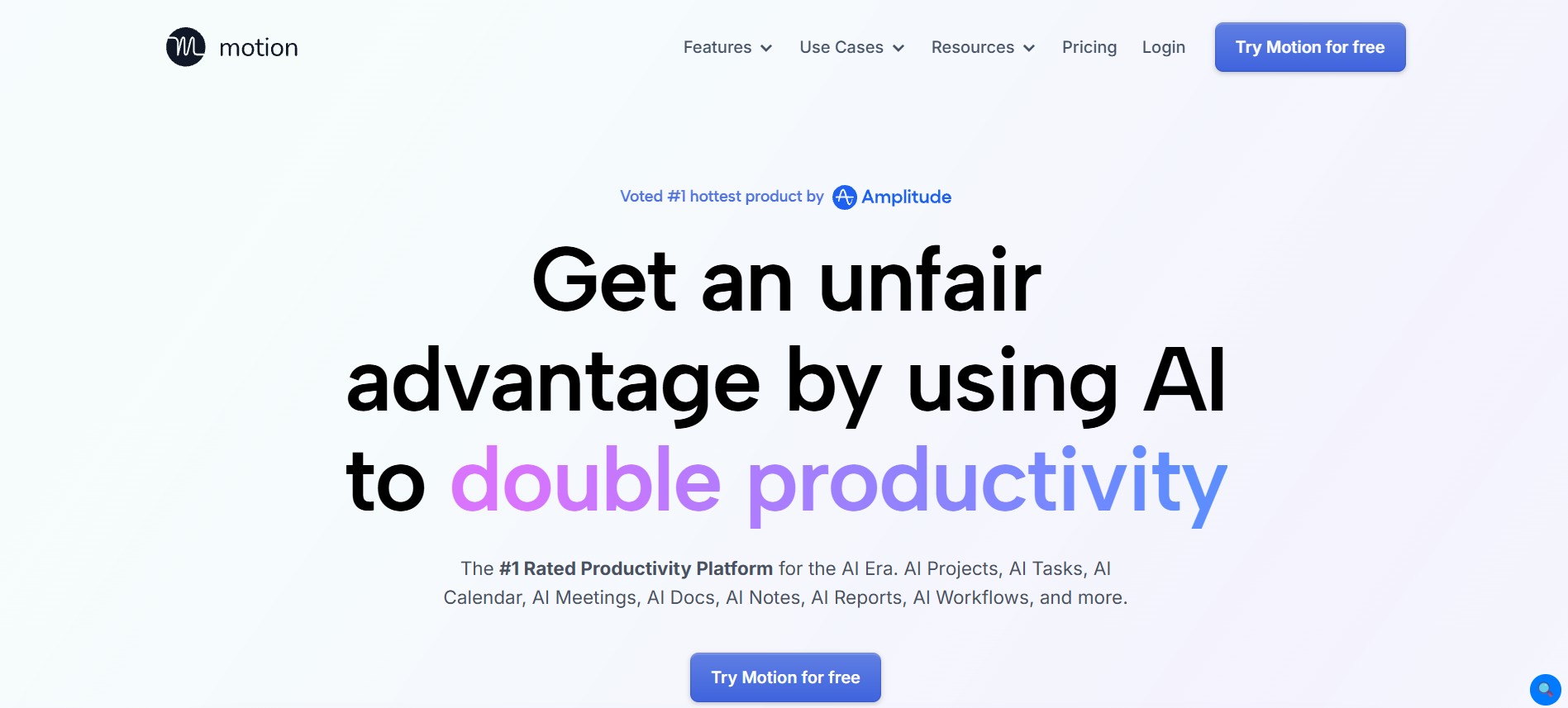
Best for: Small business owners whose biggest problem is never having enough time
Motion is the AI scheduling and productivity tool that’s genuinely different from a standard calendar app. It takes everything on your to-do list – tasks with deadlines, meetings, recurring work – and automatically builds your daily schedule around it.
Whenever a meeting runs long or something urgent comes up, it reschedules everything else cleverly so that priorities can be addressed promptly. You stop manually finding out when you are going to do what.
For small business owners who are pulled in five directions and consistently end the week with tasks they meant to get done, Motion changes how the workday actually functions.
What I actually use it for: Letting Motion plan my day instead of manually blocking time, keeping project deadlines visible against everything else on my plate, automatically rescheduling tasks when things run over.
The honest downside: Motion has a high learning curve, which takes a week or two before you actually get used to the patterns of the platform and commence making really smart suggestions. The first few days can feel as if the AI is competing with you instead of assisting you. And there is no free plan. It is a paid subscription from the very first day. This makes it even tougher to trial properly.
Bottom line: Totally worth it for small business owners who find it difficult to manage time properly and for whom time is the real growth. In case you struggle with keeping abreast of the tasks and priorities, Motion can be a real winner at your hands.
Frequently Asked Questions
1. Enumerate the best AI tools for small businesses at present.
It depends on your biggest pain point. But if I had to pick three starting points:
ChatGPT or Claude first – free, immediately useful across almost every business task, and requires zero setup. HubSpot free CRM if you are managing customers and leads without a proper system. Canva Magic Studio if you are creating visual content without a designer.
Those three cover the widest ground for the least money.
2. Is there good free AI software for business?
Yes, more than most people realize. ChatGPT and Claude both have solid free tiers. HubSpot’s CRM is free. Canva has a free plan. Fireflies.ai offers free transcription minutes. Tidio has a functional free chat plan. Zapier’s free plan handles basic automations.
You can build a real AI-assisted business workflow without spending a dollar to start. Add paid tools when you’ve outgrown the free tier of something specific.
3. How do I know which AI business tools are actually worth paying for?
One test I use: does this tool replace something I’m already paying for, or already paying someone else to do?
If AI bookkeeping replaces your bookkeeper, or an AI copywriting tool replaces freelance copywriting, the ROI math is straightforward. If you’re adding a new tool to an already bloated software stack without cutting anything – be skeptical.
Start free where possible. Upgrade only when you’ve confirmed the tool is saving real time or replacing real cost.
4. Will AI tools actually make a difference for a very small business – like, just me?
Especially for solo operators, honestly. When you’re one person doing everything, the time compression AI provides is more impactful than it is for a larger team.
The difference between spending 3 hours on marketing content versus 45 minutes matters more when those 3 hours are the only ones you had. AI doesn’t add hours to your week, but it gets more done in the hours you have.
5. Can I use AI tools without any technical skills?
Most of the tools on this list are designed to require zero technical knowledge. ChatGPT, Claude, Canva, HubSpot, Fireflies – you sign up, and you’re using them. No setup, no developer, no IT department.
Zapier has a small learning curve for complex automations. However, the AI features decrease that considerably. In case you can describe what you wish in a sentence, Zapier can develop it for you.
Last updated: June 2026. Pricing and feature availability change regularly – verify directly with each tool before subscribing.

Vivek Asrani is a tech writer and AI tools reviewer who has been consistently transforming complex technology into user-friendly stories that readers look forward to. His over a decade of experience in the IT content space allows him to impart useful information on AI tools and digital products he has practically used with a sharp eye for real-world value. His reviews are written to ensure that readers see what a tool can actually do before they think of buying and spending time on the tool. He concentrates on clarity and practical details that make technology effortless to trust and use.