

10 Best AI Tools for Ecommerce Businesses in 2026
When I first started layering AI tools into an online world, I genuinely thought I’d just be saving time on product descriptions. What actually happened was bigger: cart recovery emails that write themselves, a support inbox that handles half its own tickets, and SEO content that used to take a whole afternoon now taking twenty minutes. The store didn’t just get faster. It got smarter about who it was talking to and when.
If you’re staring down a list of “best AI tools for ecommerce” articles that all read like the same affiliate template, I get the fatigue. So here’s the version based on what’s actually running in production stores right now — not just shiny dashboards, but tools that move real numbers like conversion rate, resolution rate, and cost per order.
What Counts as an AI Tool for Ecommerce?
It’s a broader category than most people assume. Some of these tools write your product copy and ad creative. Some predict who’s about to abandon their cart before they even move their cursor toward the “X” button. Others run your customer support inbox, forecast your inventory, or tell you exactly what to fix on a landing page that isn’t converting. The common thread: they’re not just automating a task you used to do manually — they’re making a decision or taking an action based on real customer data.
Why You Should Actually Be Using These
The brands pulling ahead in 2026 aren’t the ones using the most AI tools — they’re the ones using the right tool for whichever part of the funnel is actually bottlenecked. A 24/7 support chatbot doesn’t help much if your real problem is that nobody’s finding your product page in search. Knowing where to start matters more than the tool list itself, which is why I’ve grouped these by what they’re actually solving.
How I Picked These Tools
I focused on tools that are genuinely in use at real stores, not just trending on a “top AI tools” listicle. That meant looking at pricing transparency, whether there’s a usable free tier or trial, and whether the tool does the work or just hands you a dashboard and leaves the heavy lifting to you. I also made sure to cover the full funnel — content, support, marketing, SEO, visuals, and analytics — instead of stacking five copywriting tools and calling it a guide.
Quick Comparison Table
| Tool | Best For | Category | Free Tier |
| Shopify Magic | Built-in copy and chat for Shopify stores | Content/Support | Yes, free with Shopify |
| ChatGPT | Product descriptions, ad copy, brand voice | Content creation | Yes, paid plan ~$20/mo |
| Klaviyo | Email/SMS automation and segmentation | Marketing | Yes, up to 250 contacts |
| Tidio (Lyro) | 24/7 customer support automation | Customer support | Yes, limited |
| Gorgias | Helpdesk automation for support teams | Customer support | Trial, paid plans |
| Jasper | Ad copy and content at scale | Content creation | Trial, paid plans |
| Surfer SEO | Optimizing blog and category content | SEO | No, paid only |
| Triple Whale | Attribution and LTV/CAC analytics | Analytics | Trial, paid plans |
| Photoroom | Product photo editing and backgrounds | Visual content | Yes, free plan |
| Wisepops | Onsite personalization and cart recovery | Marketing/CRO | Trial, paid plans |
The 10 Best AI Tools for Ecommerce — Honest Reviews
1. Shopify Magic: Best Free, Built-In AI for Shopify Stores
Best for: Stores already on Shopify that want AI without adding a new subscription
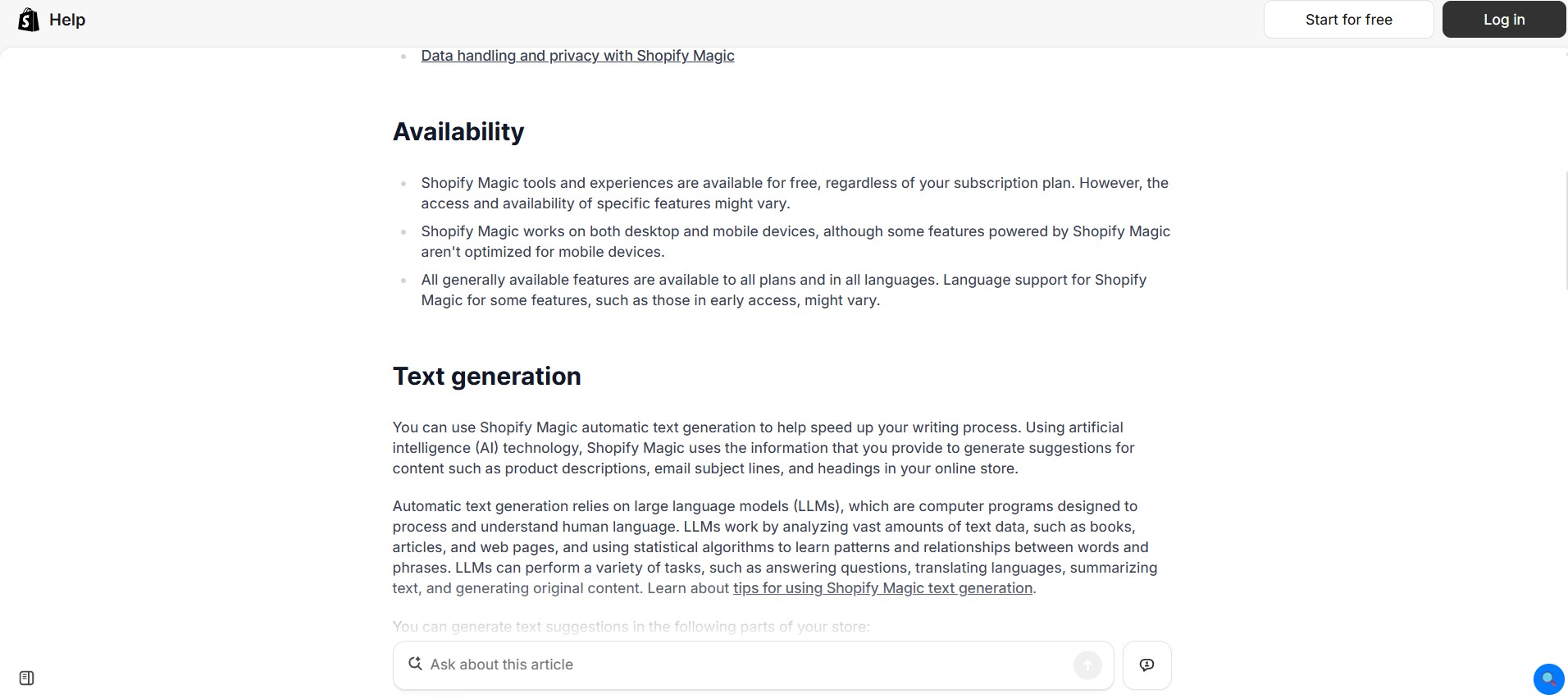
If your store runs on Shopify, you already have a surprisingly capable AI toolkit sitting in your admin at no extra cost. Magic generates product descriptions from a few keywords, writes email campaign copy with subject lines and CTAs, removes and replaces image backgrounds, and suggests chat responses through Shopify Inbox. Shopify’s Sidekick assistant also lets you manage store tasks conversationally — ask it to build a discount code or pull a sales trend, and it executes the task right in your admin.
What I actually use it for: Quick first-draft product descriptions and email copy when I don’t want to open a separate tool for a five-minute task.
The honest downside: It covers basic versions of several categories, but specialized tools outperform it in each individual one. It’s a strong starting point, not a replacement for a dedicated email or support platform once you scale.
Free tier bottom line: The easiest AI tool to start with if you’re on Shopify — there’s no real reason not to turn it on.
2. ChatGPT: Best for Content, Copy, and Brand Voice
Best for: Product descriptions, ad copy, email sequences, and blog outlines
This is the tool I lean on more than anything else day to day. It handles product descriptions, ad copy, and email sequences, and once you set up custom instructions describing your brand’s tone, it gets noticeably better at staying on-voice across everything it writes.
What I actually use it for: First drafts of product descriptions and ad variations that I then edit down to match my actual brand voice.
The honest downside: It’s a general-purpose writing tool, not an ecommerce platform — it doesn’t execute anything in your store or pull live sales data unless you connect it to other systems.
Free tier bottom line: The free version is usable for occasional tasks, but the $20/month Plus plan is one of the better investments you can make if content is a regular bottleneck.
3. Klaviyo: Best for Email and SMS Marketing Automation
Best for: Abandoned cart flows, predictive segmentation, and lifecycle marketing
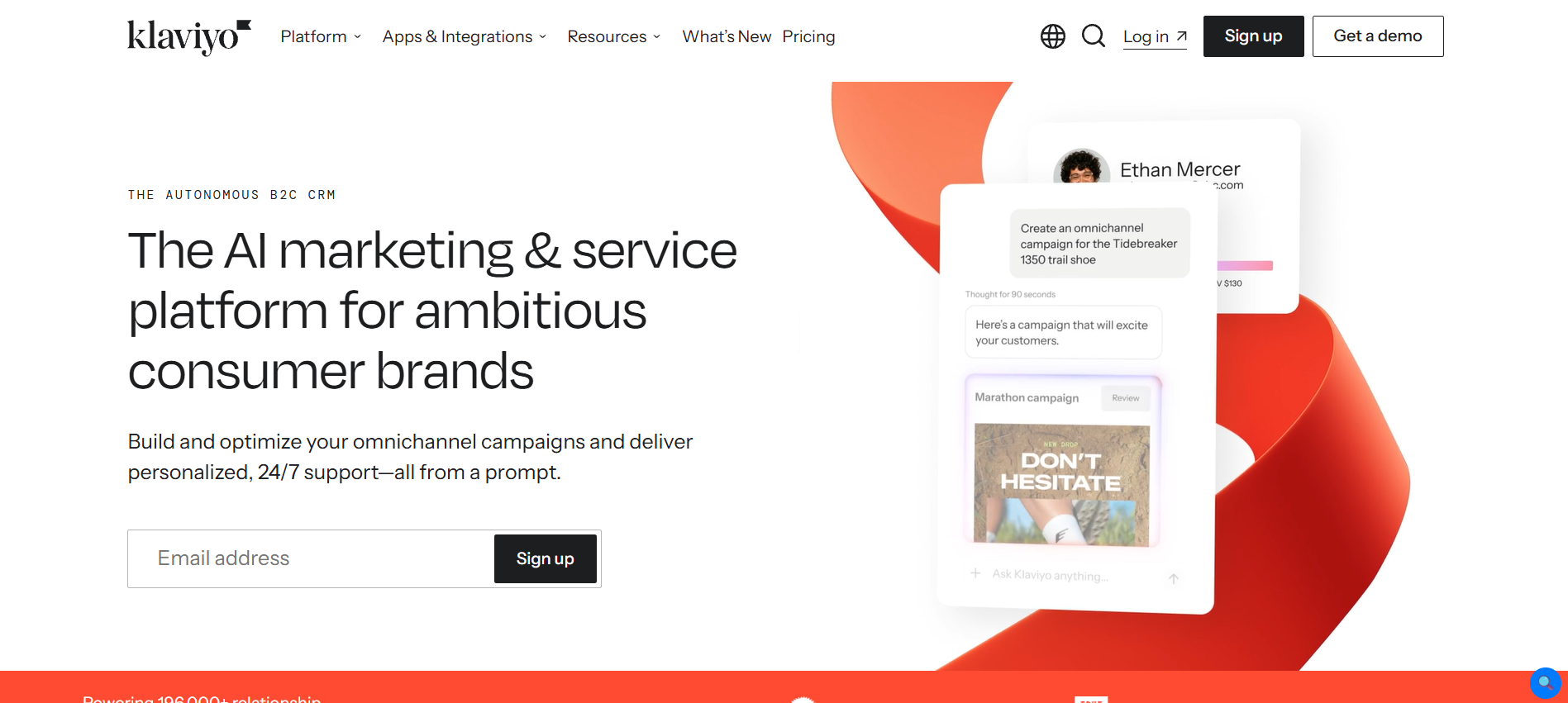
Klaviyo’s AI features handle send-time optimization and predictive segmentation, meaning it figures out the best moment to email a given customer and which segment they actually belong to based on real purchase behavior, not just a static tag you set manually.
What I actually use it for: Abandoned cart sequences that adjust their timing per customer instead of firing on the same fixed schedule for everyone.
The honest downside: The free plan caps out at 250 contacts, so it stops being free almost immediately for any store with real traffic.
Free tier bottom line: A near-essential tool once your list grows past the free tier — the predictive segmentation alone tends to pay for the subscription.
4. Tidio (Lyro AI): Best for 24/7 Customer Support Automation
Best for: Deflecting repetitive support tickets without losing response quality
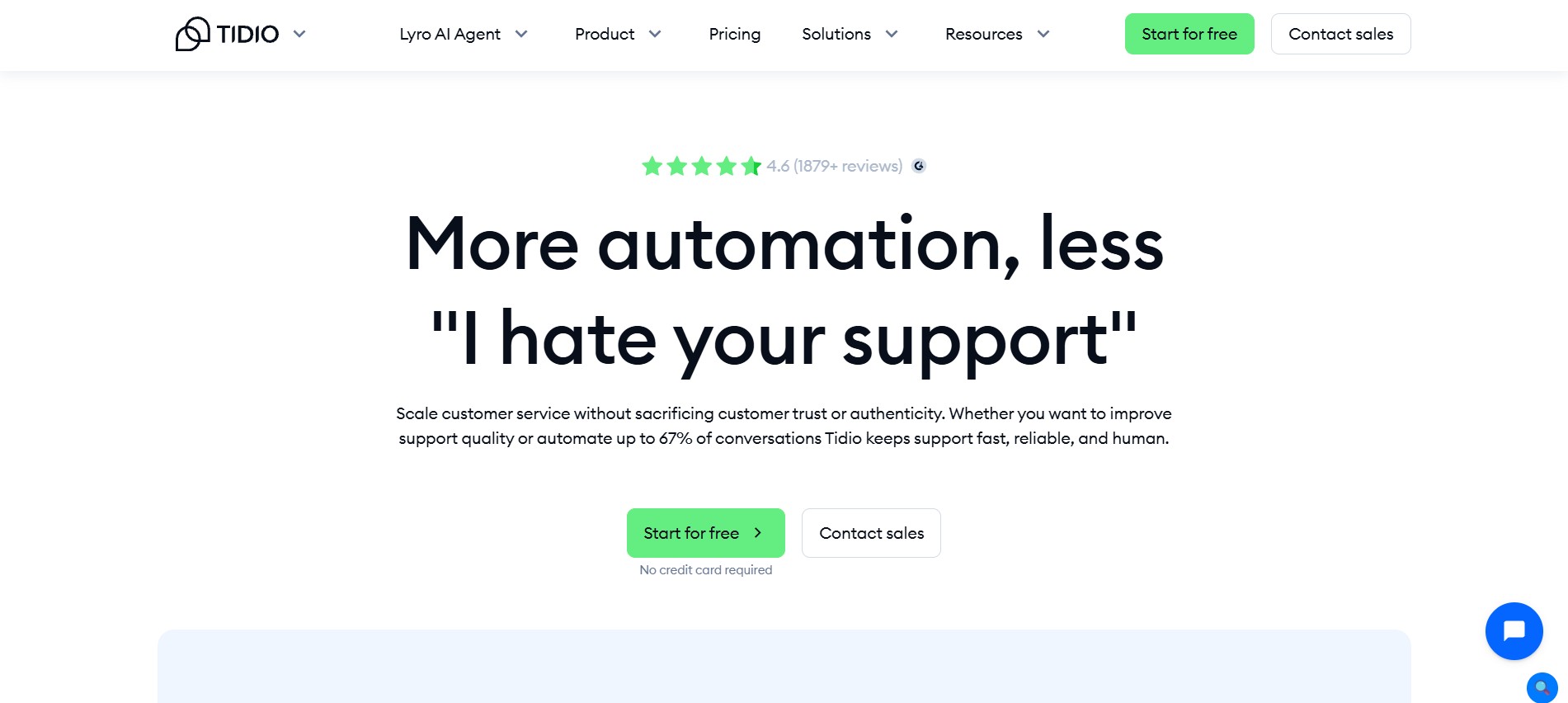
Tidio’s Lyro chatbot handles routine inquiries using natural language processing — product questions, order tracking, basic troubleshooting — and learns from each interaction to improve over time. Stores using AI chatbots like this report meaningful lifts in lead conversion simply because customers get an answer instantly instead of waiting on email.
What I actually use it for: Catching the “where’s my order” and basic product-question tickets so my actual support team can focus on the messier, higher-value conversations.
The honest downside: It’s strongest on routine inquiries — anything genuinely complex or emotionally charged still needs a human, and the free tier limits how many conversations it can handle.
Free tier bottom line: A solid entry point for automating support without a big upfront commitment, especially for smaller teams.
5. Gorgias: Best for Scaling a Support Team with AI
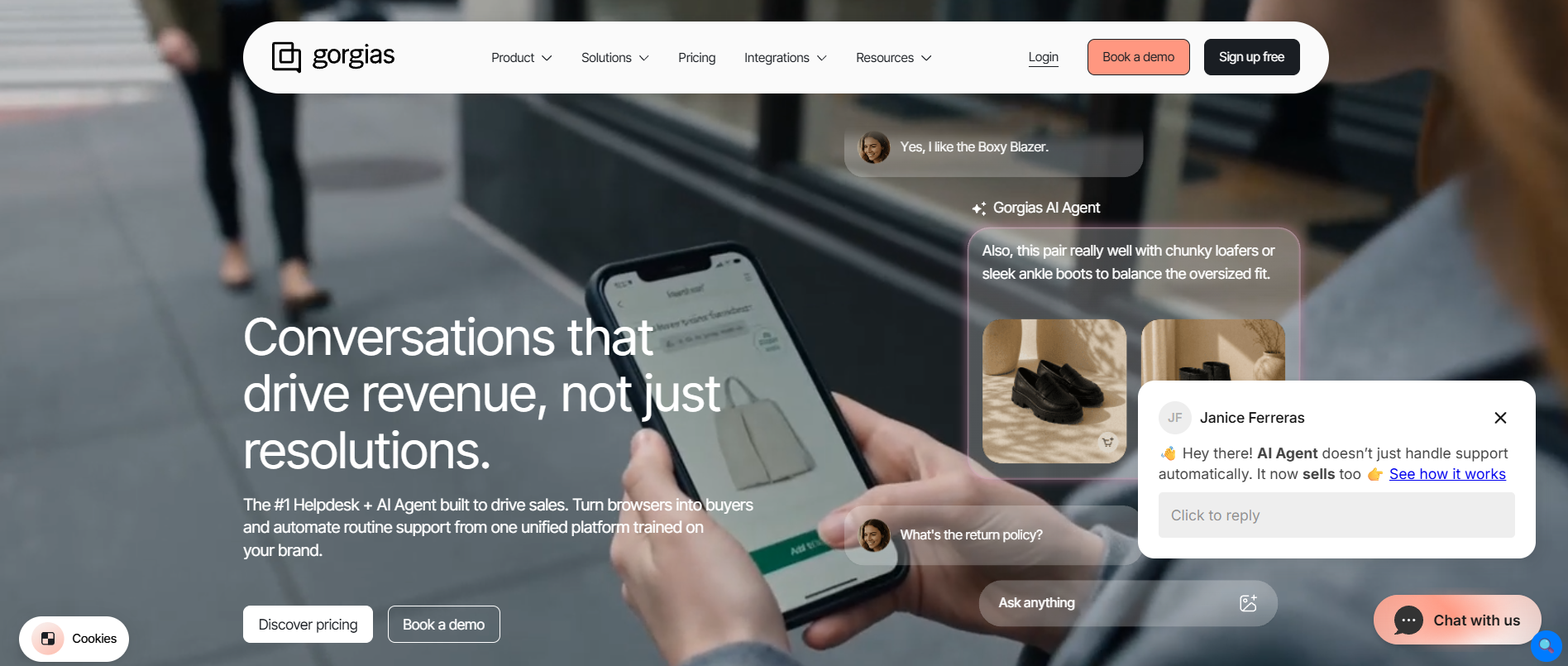
Best for: Stores with a dedicated support team that need AI to handle volume, not replace people
Gorgias is built specifically for ecommerce helpdesks, pulling order and customer data directly into the support inbox so agents (and the AI itself) aren’t switching tabs to look something up. It’s the category leaders point to when customer-facing AI is actually resolving issues and taking action across systems, not just generating canned replies.
What I actually use it for: Keeping order, shipping, and return data visible right next to the conversation so resolution doesn’t require five extra clicks.
The honest downside: It’s priced and built for stores that already have support volume worth automating — it’s overkill for a brand-new store handling a handful of tickets a week.
Free tier bottom line: No meaningful free tier, but worth the trial if support tickets are eating real staff hours.
6. Jasper: Best for Ad Copy and Content at Scale
Best for: Brands running paid acquisition that need a high volume of creative variants
The brands seeing the fastest gains from AI creative tools in 2026 are the ones generating far more ad variants than they used to — the algorithm needs more options than most teams can produce manually, and tools like Jasper collapse the cost of producing each variant dramatically.
What I actually use it for: Bulk-generating ad copy variations to test against each other instead of running the same three headlines for months.
The honest downside: Jasper generates content, but it doesn’t execute or optimize anything in your actual funnel — you still need separate tools for the popups, email, and analytics side of things.
Free tier bottom line: Worth the trial if creative variant volume is your bottleneck, particularly for brands spending meaningfully on paid ads.
7. Surfer SEO: Best for Optimizing Blog and Category Content

Best for: Long-form content and category pages competing for organic search traffic
Surfer analyzes your content against top-ranking competitors for a given keyword and scores it on usage, length, structure, and the gaps your competitors are covering that you aren’t. It meaningfully cuts down content research time, especially for blog posts and longer category pages.
What I actually use it for: Checking a draft blog post against the top-ranking pages before publishing, instead of guessing at structure.
The honest downside: It’s less useful for short product descriptions, and the AI editor can produce copy that scores well but reads stiffly — always rewrite the final pass yourself.
Free tier bottom line: No free plan, and it’s priced for serious content operations, but it earns its cost if organic search is a real growth channel for your store.
8. Triple Whale: Best for Attribution and LTV/CAC Analytics
Best for: DTC brands running paid acquisition who need a clear view of what’s actually working
Triple Whale consolidates data from Shopify, your ad platforms, and your email tools into one dashboard with AI-generated insights on lifetime value, customer acquisition cost, and ROAS. For brands with meaningful ad spend, it solves the recurring headache of stitching together five different reporting tabs to answer one question.
What I actually use it for: Getting a single, trustworthy number for blended CAC instead of reconciling Meta’s numbers against Shopify’s by hand.
The honest downside: It’s built for Shopify-centric brands with real ad spend — if you’re pre-revenue or running minimal paid acquisition, the value is much thinner.
Free tier bottom line: No free tier, but for DTC brands serious about paid acquisition, the attribution clarity alone justifies trying it.
9. Photoroom: Best for Product Photography and Visual Content
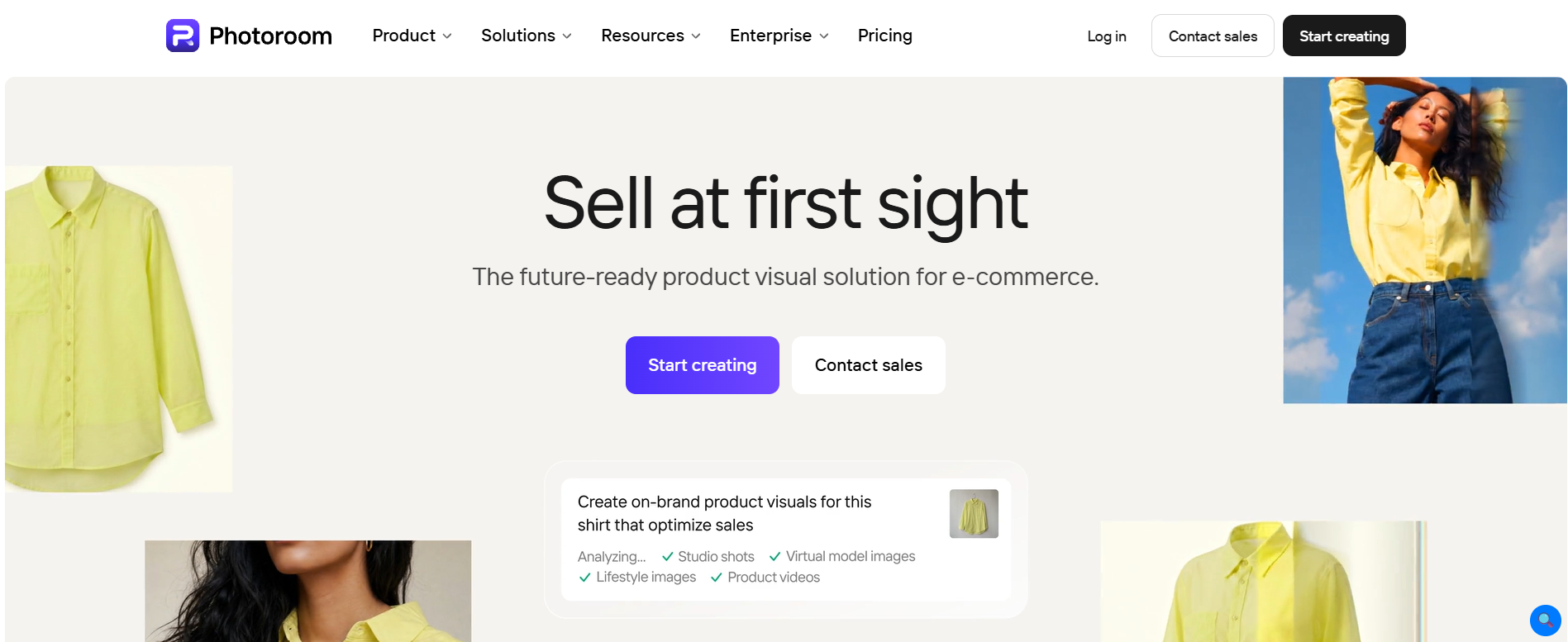
Best for: Clean, professional product images without a photographer or studio
Photoroom handles background removal, image expansion, and on-model-style product photography, letting non-designers produce professional-looking product shots, mockups, and marketing graphics without touching Photoshop.
What I actually use it for: Quickly cleaning up supplier product photos into something that actually matches my store’s visual branding.
The honest downside: The pricing structure gets confusing fast once you factor in credits, weekly versus yearly billing, and a separate API price list — read the fine print before committing.
Free tier bottom line: The free plan is genuinely usable for occasional edits; heavier catalog work will push you into a paid tier.
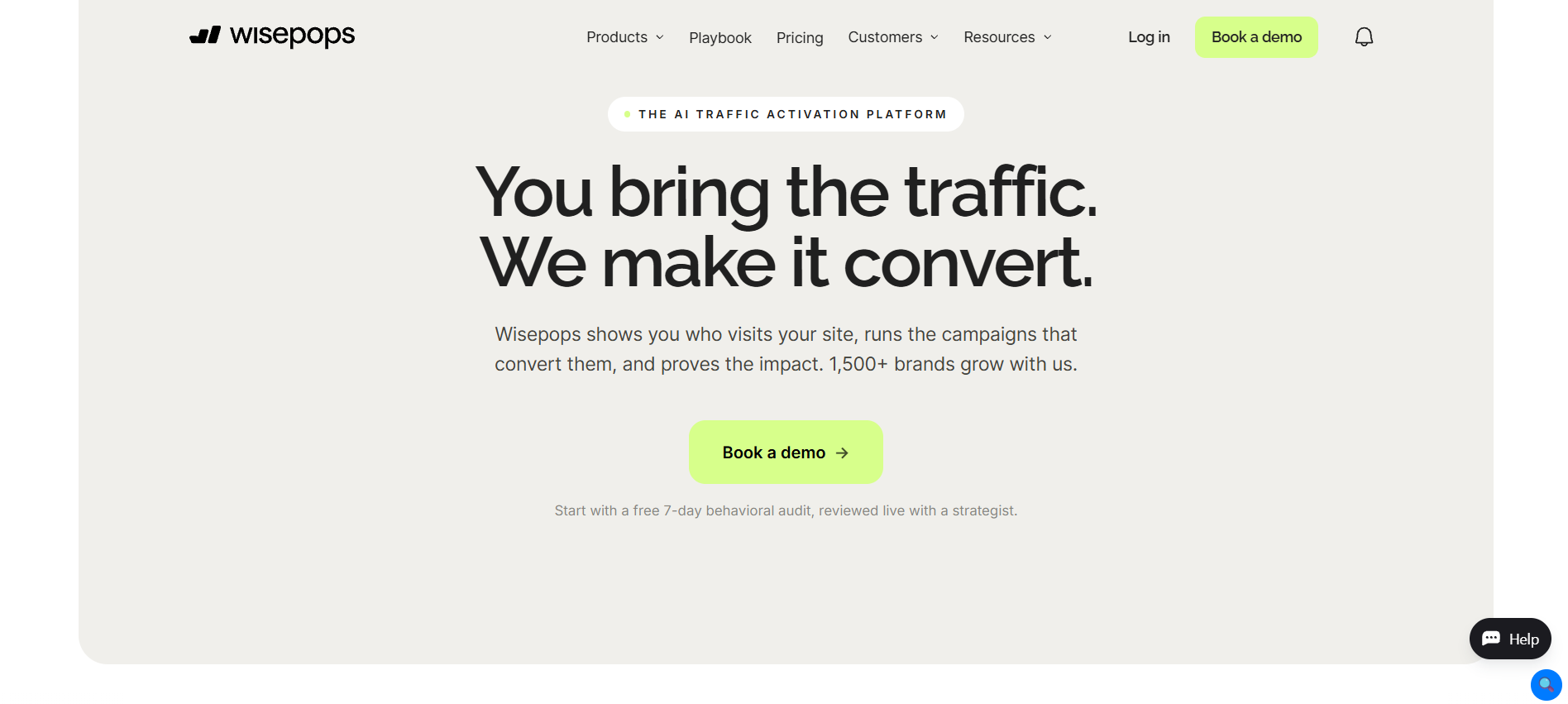
10. Wisepops: Best for Onsite Personalization and Cart Recovery
Best for: Catching abandoning visitors before they actually leave, not after
Wisepops uses machine learning to analyze browsing behavior, cart activity, and purchase history in real time, then triggers popups and onsite messages at the moment of highest abandonment risk — rather than the old model of waiting for a cursor to move toward the browser’s close button.
What I actually use it for: Cart recovery messaging that reaches anonymous visitors, not just the people who already gave me their email.
The honest downside: Like most of the higher-impact tools on this list, there’s no meaningful free tier, and the value scales with traffic — a low-traffic store won’t see the same lift.
Free tier bottom line: Worth trialing once you have enough traffic for the behavioral data to actually mean something.
FAQs
1. What’s the best free AI tool for ecommerce?
Shopify Magic, if you’re already on Shopify — it’s built into your admin at no extra cost and covers product descriptions, email copy, and basic chat suggestions. ChatGPT’s free tier is the best general-purpose option if you’re on another platform.
2. What AI marketing tools should I start with first?
Klaviyo for email and SMS automation is usually the highest-ROI starting point, since most stores already have customer data sitting unused. Add on-site personalization tools like Wisepops once your traffic is high enough to make behavioral targeting worthwhile.
3. Can AI tools fully replace a customer support team?
Not entirely. Tools like Tidio and Gorgias are excellent at deflecting routine, repetitive tickets — order status, basic product questions — but anything genuinely complex or emotionally charged still needs a human in the loop.
4. Which AI tool actually helps with SEO for an ecommerce store?
Surfer SEO is built specifically for optimizing blog and category content against what’s already ranking, though it’s less useful for short individual product descriptions where ChatGPT or Shopify Magic does the job faster.
5. How many AI tools should a small ecommerce business actually run?
Most growing teams run somewhere between five and eight AI tools across support, marketing, content, and analytics. Start with whichever category is your actual bottleneck rather than stacking tools that solve problems you don’t have yet.
This list reflects each tool’s pricing, free tiers, and feature set as of mid-2026. AI tools in this space update fast, so confirm current pricing before committing to a subscription.

Vivek Asrani is a tech writer and AI tools reviewer who has been consistently transforming complex technology into user-friendly stories that readers look forward to. His over a decade of experience in the IT content space allows him to impart useful information on AI tools and digital products he has practically used with a sharp eye for real-world value. His reviews are written to ensure that readers see what a tool can actually do before they think of buying and spending time on the tool. He concentrates on clarity and practical details that make technology effortless to trust and use.