
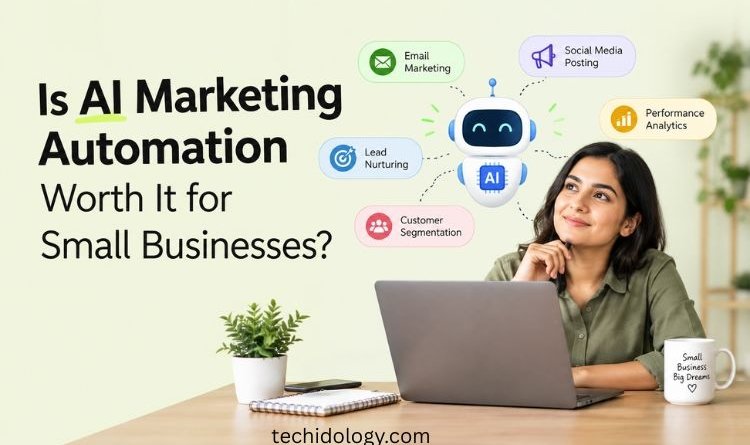
Is AI Marketing Automation Worth It for Small Businesses?
Small business owners wear many hats. You answer calls, follow up with leads, post on social media, send emails, and run the business itself. Marketing gets pushed to the end of the day, or skipped. This is the problem AI marketing automation tries to solve. These tools can send follow-up emails, answer common questions, schedule posts, and track leads without you doing every step by hand. But they aren’t magic. Some businesses save hours weekly and win more customers. Others pay for tools they never set up or end up sending messages that sound robotic. The difference comes down to planning, not the software.
In this article, I’ll explain what AI marketing automation does, what it costs, where it helps, where it falls short, and how to decide if it’s worth it for your business. I’ll also share a simple way to start small and measure results.
Table of Contents
What AI Marketing Automation Actually Means
Marketing automation isn’t new. Email tools have sent scheduled newsletters for years. What’s changed is the AI part.
Traditional automation follows fixed rules. If someone fills out a form, send email A. If they don’t open it, send email B three days later.
AI adds a layer on top of that. It can:
- Write first drafts of emails, posts, and ads
- Answer customer questions in plain language through chat or text
- Sort leads based on how likely they are to buy
- Suggest the best time to send messages
- Summarize calls, reviews, and customer feedback
- Adjust ad budgets based on performance
So instead of only following rules, the system can make small decisions and create content. That’s useful. It also means you need to watch it more closely.
Common Tasks Small Businesses Automate
Here are the areas where small businesses tend to get the most value.
Lead Follow-Up
This is often the biggest win. When someone fills out a form or calls after hours, a fast reply matters. Many leads go to whoever responds first.
Automation can:
- Send an instant text or email when a form is submitted
- Text back missed calls with a short message
- Ask a few questions to qualify the lead
- Book appointments directly on your calendar
For service businesses like contractors, dentists, and law firms, faster follow-up can lead to more booked jobs without hiring more staff.
Email Marketing
AI can help write and send:
- Welcome emails for new subscribers
- Follow-ups after a quote or estimate
- Reminders for appointments or renewals
- Win-back emails for customers who haven’t returned
- Monthly newsletters
You still need to review the content. But AI can cut writing time from hours to minutes.
Chatbots and Website Assistants
A website chat assistant can answer common questions any time of day. Hours, pricing ranges, service areas, and booking steps are typical examples.
Good chatbots hand off to a real person when the question gets complicated. Bad ones trap customers in loops. Setup makes the difference.
Review Requests
Online reviews matter for local businesses. Automation can send a review request after a job is done or an appointment ends. Some tools also draft replies to reviews, which you can edit and post.
Social Media
AI can draft posts, suggest captions, and schedule content across platforms. This helps keep your accounts active. But fully automated social media often feels generic. Most businesses do better using AI social media tools for drafts and adding their own photos, stories, and voice.
Ads and Reporting
Platforms like Google Ads and Meta already use AI to adjust bids and targeting. Automation tools can also pull data into simple reports so you can see what’s working without logging into five dashboards.
The Real Benefits
When it’s set up well, AI marketing automation can help in these ways.
Time savings. Repetitive tasks like follow-ups, reminders, and scheduling take a lot of hours. Automating them frees you up for work that needs a human.
Faster response. Leads get a reply in seconds, not hours. That alone can improve how many turn into customers.
Consistency. Emails go out on time. Reviews get requested every time. Nothing slips because someone forgot.
Better tracking. You can see where leads come from and which messages work. That helps you spend money more wisely.
Scaling without hiring right away. You can handle more leads before you need to add staff.
The Downsides Nobody Mentions Enough
Here’s the honest side. These problems are common.
Setup takes time. Most tools don’t work well out of the box. You need to connect them to your website, CRM, calendar, and phone system. You also need to write messages and build workflows. That can take days or weeks.
Generic content. AI writing can sound flat and repetitive. Customers notice. If every message sounds like a template, it can hurt trust.
Mistakes happen. AI can give wrong answers, invent details, or reply in ways that don’t fit your business. A chatbot quoting the wrong price or promising something you don’t offer creates real problems.
Over-automation. Some businesses automate so much that customers can’t reach a real person. That frustrates people and can cost you sales.
Tool overload. It’s easy to sign up for five tools that don’t talk to each other. Then you’re paying for overlap and managing more logins.
Legal and privacy rules. Texting and emailing customers comes with rules. In the U.S., texting usually requires consent under the Telephone Consumer Protection Act (TCPA). Email marketing must follow CAN-SPAM rules, like including an unsubscribe link. You’re also responsible for how customer data is stored and used. Automation doesn’t remove these duties. It can make mistakes happen at scale if you’re not careful.
What It Costs
Costs vary widely. Here’s a general picture.
Software. Basic email and scheduling tools can cost little or nothing for very small lists. All-in-one platforms with CRM, texting, chat, and automation often run from about $100 to several hundred dollars a month. Prices rise with contacts, users, and features.
Usage fees. Texting, calling, and AI features may charge per message or per use. These can add up as you grow.
Setup. If you hire someone to build your system, expect a one-time setup fee. This depends on how many workflows and integrations you need.
Ongoing management. Someone has to monitor results, fix issues, and update messages. That’s either your time or a monthly fee to an agency or consultant.
The real question isn’t the price. It’s whether the tool brings in more revenue or saves more time than it costs.
When It’s Worth It
AI marketing automation usually pays off when:
- You get a steady flow of leads but struggle to follow up quickly
- You miss calls or form submissions after hours
- You have repeat customers who need reminders
- You rely on reviews to win new business
- You spend hours each week on repetitive marketing tasks
- You have clear services and pricing that are easy to explain
Service businesses with many inquiries often see the fastest results. Think home services, dental and medical offices, legal practices, auto repair, and fitness studios.
When It May Not Be Worth It Yet
It may not be the right time if:
- You get very few leads to begin with
- Your services are highly custom and need personal conversations from the start
- You don’t have a website or basic online presence yet
- You don’t have time to set it up or anyone to manage it
- Your current process isn’t clear, even when done by hand
Automation speeds up what you already do. If your process is messy, it will just make the mess faster. Fix the basics first.
How to Start Small
You don’t need to automate everything at once. Here’s a simple approach.
Step 1: Find your biggest time drain. Write down tasks you repeat every week. Pick the one that costs the most time or loses the most leads.
Step 2: Automate one thing. For most businesses, this is lead follow-up or missed-call text-back. It’s simple and shows results fast.
Step 3: Write your messages carefully. Use your own voice. Keep messages short and clear. Make it easy to reach a real person.
Step 4: Test it yourself. Fill out your own form. Call your own number after hours. See what customers experience.
Step 5: Track results for 30 to 60 days. Look at response times, booked appointments, and revenue from leads.
Step 6: Add the next piece. Once the first workflow is working, move to review requests, email follow-ups, or appointment reminders.
How to Measure If It’s Working
Pick a few numbers and track them before and after:
- Average response time to new leads
- Percentage of leads that book an appointment or call
- Number of new reviews per month
- Hours saved per week
- Revenue from new and returning customers
- Unsubscribe and complaint rates
If response time drops and bookings go up, it’s working. If complaints rise or customers seem confused, adjust your messages or pull back.
DIY vs. Hiring Help
You can set up many tools yourself. Lots of platforms have templates and tutorials. This works well if you’re comfortable with tech and have time to learn.
Hiring help makes sense when:
- You need several tools connected together
- You want custom workflows for your industry
- You don’t have time to manage it
- You’ve tried before, and it didn’t stick
If you’re looking into AI marketing automation Fort Lauderdale businesses use, ask any provider to show real examples of workflows they’ve built for companies like yours. Also ask who owns the accounts and data if you stop working with them.
Questions to Ask Before You Buy
- What problem will this solve for my business?
- How long does setup take?
- Does it connect with my website, phone, and calendar?
- Can customers easily reach a real person?
- What are the total monthly costs, including usage fees?
- How do I cancel, and can I export my data?
- How does the tool handle consent for texts and emails?
Final Thoughts
AI marketing automation can be worth it for small businesses, but only when it solves a real problem. Faster lead follow-up, consistent reminders, and steady review requests are where most businesses see results. Generic content, poor setup, and too many tools are where most go wrong.
Start with one task, keep a human in the loop, and measure what happens. If it saves time and brings in more customers, build from there. If it doesn’t, you’ve learned that without a big investment.

Vivek Asrani is a tech writer and AI tools reviewer who has been consistently transforming complex technology into user-friendly stories that readers look forward to. His over a decade of experience in the IT content space allows him to impart useful information on AI tools and digital products he has practically used with a sharp eye for real-world value. His reviews are written to ensure that readers see what a tool can actually do before they think of buying and spending time on the tool. He concentrates on clarity and practical details that make technology effortless to trust and use.